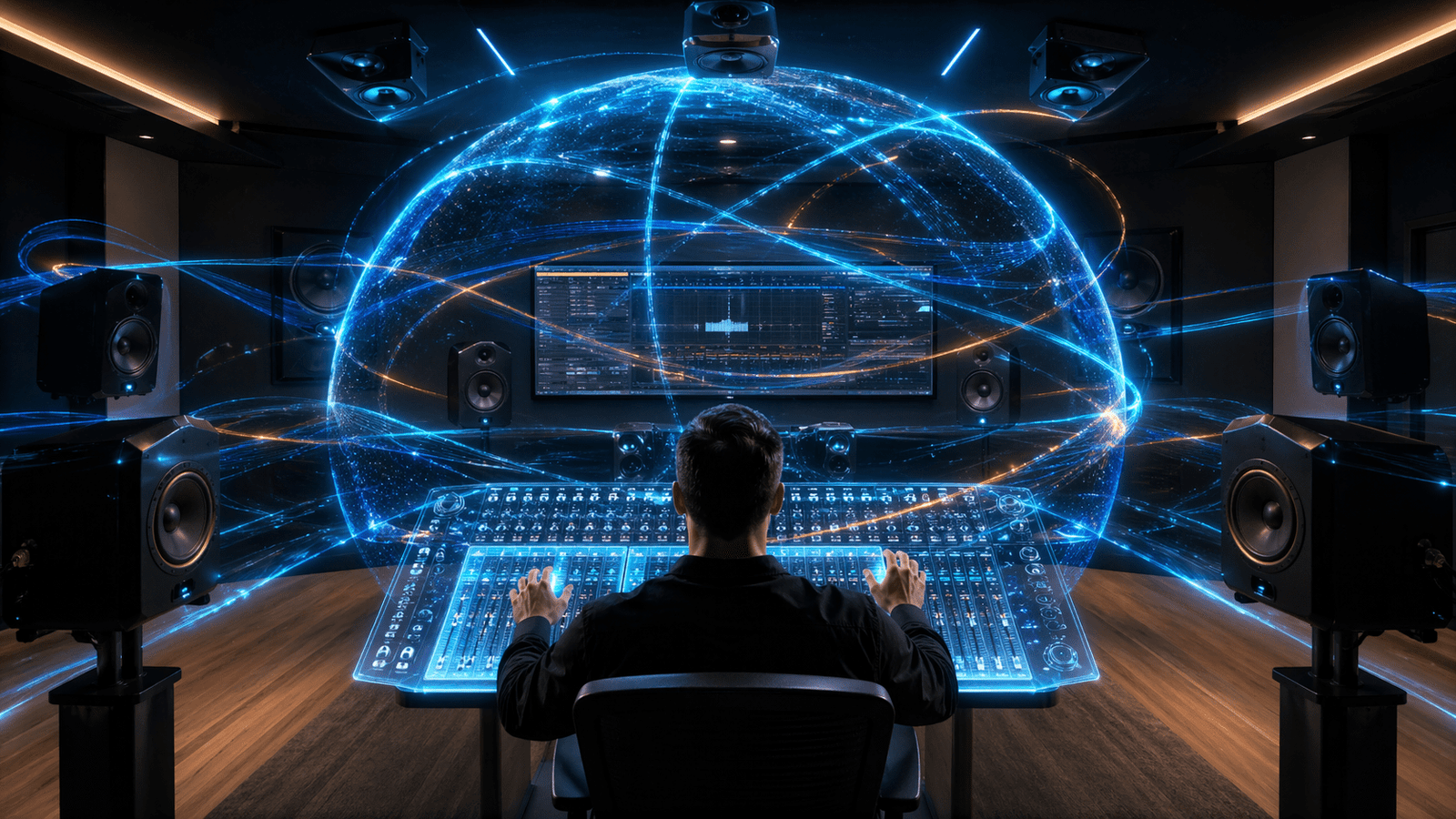
For over 70 years, the “Stereo” format (Left and Right) has been the undisputed king of the music world. However, as we move through 2026, we are witnessing the end of an era. The flat, two-dimensional soundstage is no longer enough for the modern listener. Today, the industry has shifted its focus entirely toward immersive, three-dimensional experiences. If you are a producer or engineer, mastering the art of mixing for spatial audio is no longer an “extra skill”—it is a survival requirement.
In this deep dive, we will explore why stereo is losing its grip on the market and how mixing for spatial audio is creating a new gold standard for music consumption across Apple Music, Spotify, and Amazon Music.
The 3D Revolution: What is Spatial Audio?
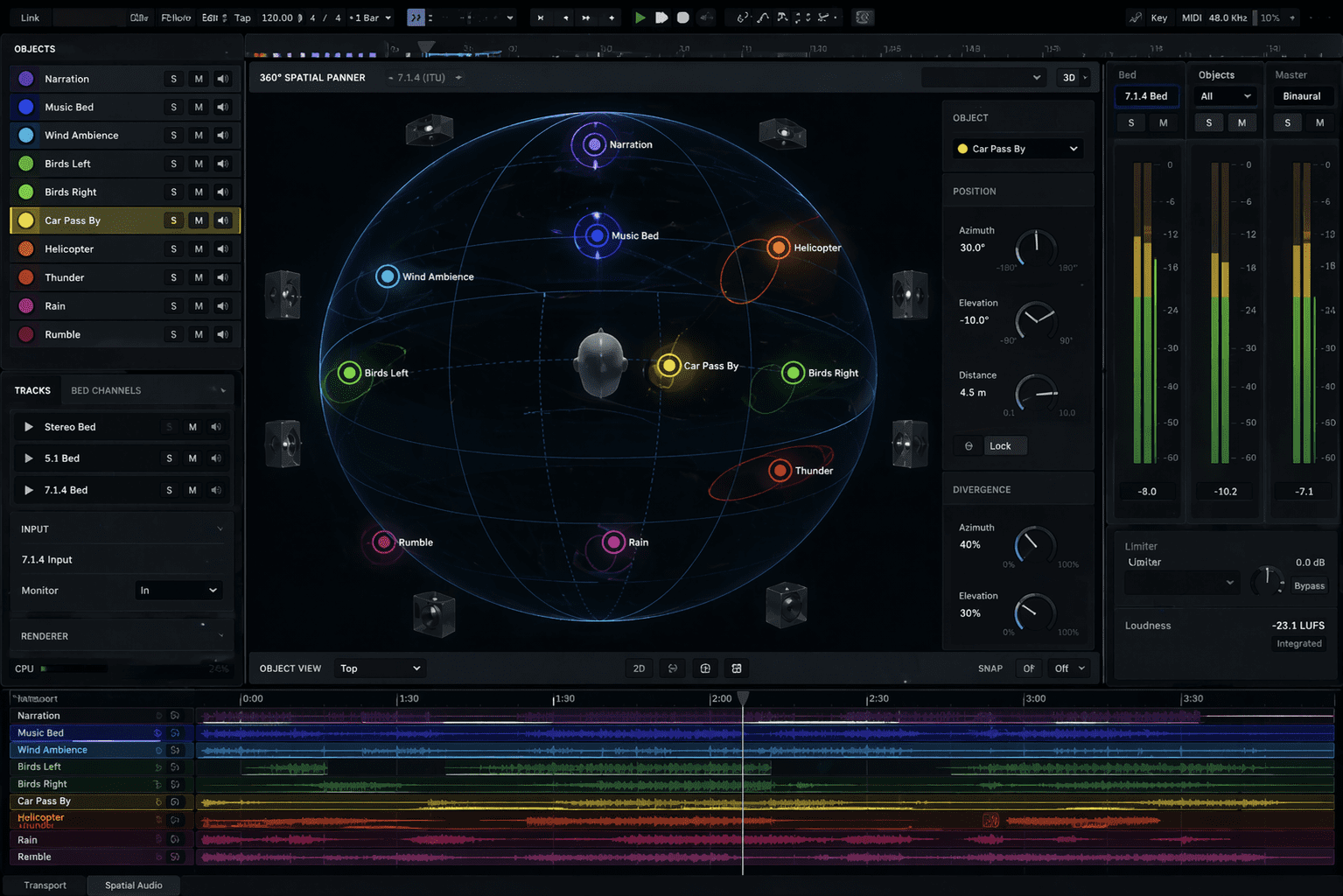
Unlike stereo, which locks sound into two channels, mixing for spatial audio allows engineers to treat individual instruments as “objects” in a 3D space. Imagine being able to place the snare drum directly in front of the listener, the backing vocals behind their ears, and the synth pads floating above their head.
This is not just a “surround sound” gimmick. Mixing for spatial audio uses binaural rendering and object-based metadata to create a sphere of sound that moves with the listener’s head (Head Tracking), making the music feel alive and atmospheric.
Why Stereo is Fading Away in 2026
The primary reason stereo is becoming obsolete is consumer technology. In 2026, almost every pair of consumer headphones, from budget earbuds to high-end over-ears, comes equipped with spatial rendering chips. When the hardware supports 360-degree sound, listeners quickly lose interest in “flat” stereo tracks.
Furthermore, streaming platforms are now incentivizing creators. Apple Music and Tidal have already started paying higher royalty rates for tracks that utilize mixing for spatial audio compared to standard stereo versions. As an artist, you are literally losing money if you aren’t providing an immersive mix.
The Technical Shift: Channels vs. Objects
When you perform mixing for spatial audio, you move away from the “Left/Right” mindset. You now work with:
-
The Bed: This is your traditional channel-based foundation (usually 7.1.2) for things like the kick drum and bass that need a solid grounding.
-
Objects: These are independent sound sources that can be moved anywhere in the 3D field. When mixing for spatial audio, you can automate these objects to swirl around the listener or “fly” across the room during a drop.
(To master these complex techniques, you might need to upgrade your workstation. Check out our Music Production & Mixing Tips for the best studio setup advice.)
Essential Tools for Mixing for Spatial Audio
In 2026, you don’t need a million-dollar studio with 12 speakers to get started. Virtual monitoring technology has improved drastically.
-
Dolby Atmos Renderer: Still the industry leader for creating high-fidelity immersive tracks.
-
L-Acoustics L-ISA: A powerful tool for live spatial audio mixing.
-
AI-Panners: New for 2026, these AI plugins analyze your stems and suggest the best 3D placements based on psychoacoustic principles.
Using AI-assisted tools for mixing for spatial audio helps you avoid “phase issues” that often ruin immersive mixes when they are downmixed to stereo.
Challenges in the Spatial World
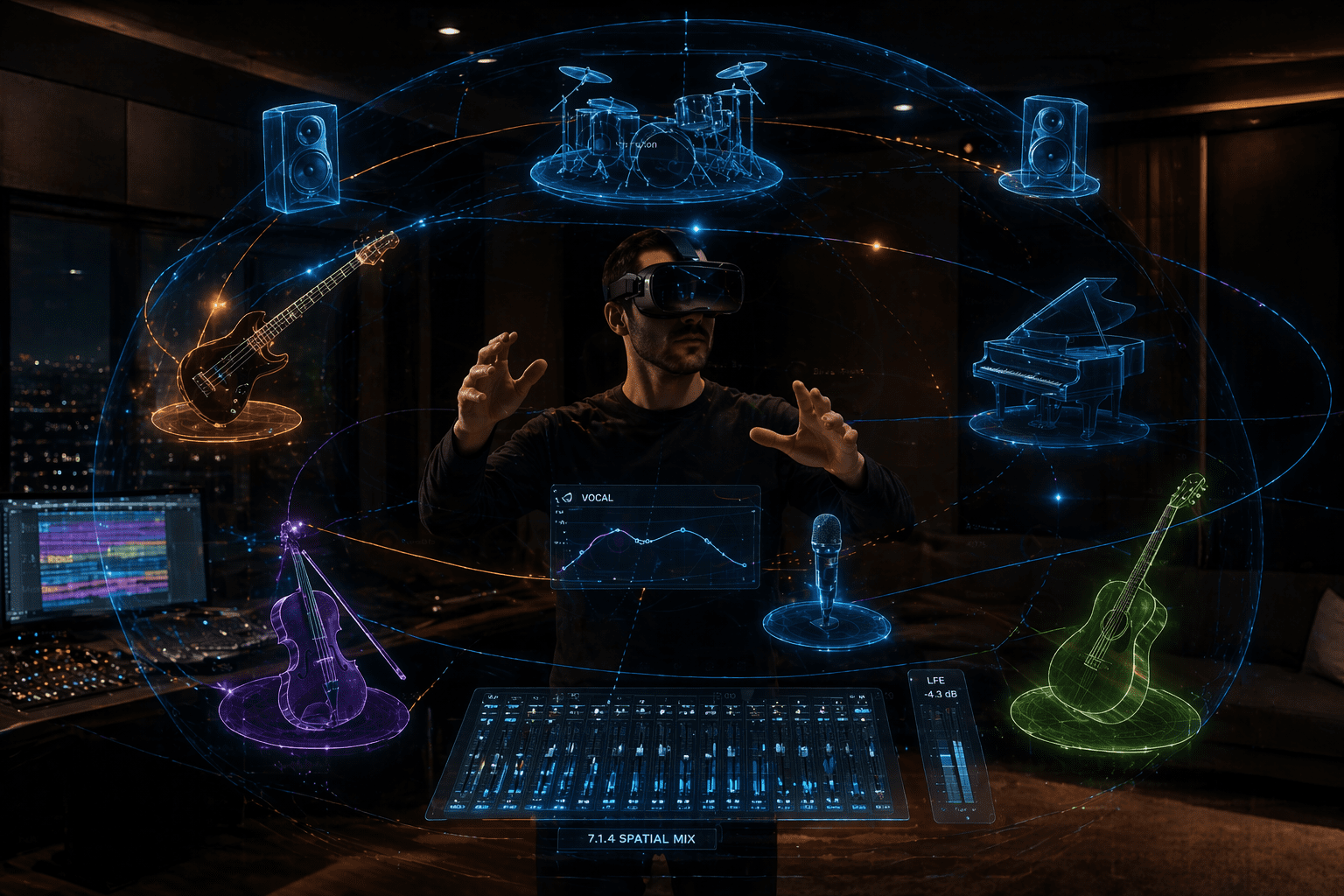
While the future is bright, mixing for spatial audio comes with its own set of hurdles. The biggest challenge is “Translation.” You need to ensure that your mix sounds amazing on a $500 Atmos soundbar, a pair of AirPods Pro, and a massive festival sound system.
Another hurdle is the learning curve. Traditional mixing focuses on frequency and dynamics. Mixing for spatial audio adds the “Z-axis” (height) and “Depth” (proximity). It requires a completely different way of thinking about the “Pocket” of a song.
The Role of VR and AR in 2026
We cannot talk about mixing for spatial audio without mentioning the Metaverse and AR glasses. As users spend more time in virtual environments, the music must match the visual 3D space. If a user turns their head to look at a virtual guitarist, the sound must stay locked to that guitarist’s position. This “Spatial Awareness” is only possible through professional mixing for spatial audio.
For a deeper look into the official technical standards for immersive audio, check out the Dolby Professional Learning Center.
Is Stereo Really “Dead”?
While we say stereo is becoming obsolete, it will likely remain as a “legacy format” for years to come. However, just as Mono was replaced by Stereo in the 1960s, Stereo is now being eclipsed by Immersive Audio. If you aren’t learning how to handle mixing for spatial audio, you are essentially producing music for a dying era.
By the end of 2026, we expect 80% of new releases from major labels to be delivered in a spatial-first format. The demand for engineers who specialize in mixing for spatial audio has never been higher.
Conclusion
The transition from 2D to 3D sound is the most significant change in music production in half a century. Mixing for spatial audio offers a level of emotional connection and immersion that stereo simply cannot match. Whether you are an indie producer or a pro engineer, now is the time to embrace the 360-degree soundstage.
The future of music is not just something you hear; it is something you inhabit. Mastering mixing for spatial audio is your ticket to being part of that future.