
1. Introduction: Beyond the Stereo Horizon
For over 50 years, the music industry has been locked in a “Stereo” mindset—left channel and right channel. But as we move into 2025, a massive shift is happening. Spatial Audio Monetization is the new frontier for independent creators. While millions of artists compete for a fraction of a cent on standard stereo streams, those utilizing immersive formats like Dolby Atmos and Sony 360 Reality Audio are seeing significant revenue increases.
In this deep-dive guide, we will explore how you can leverage this low-competition niche to build a sustainable, high-income music business. Whether you are a producer, a singer-songwriter, or a sound designer, understanding How to Monetize Your Music 2026: 10 Futuristic Strategies for DJs and Artists is the key to surviving the AI-saturated market.
2. What Exactly is Spatial Audio?
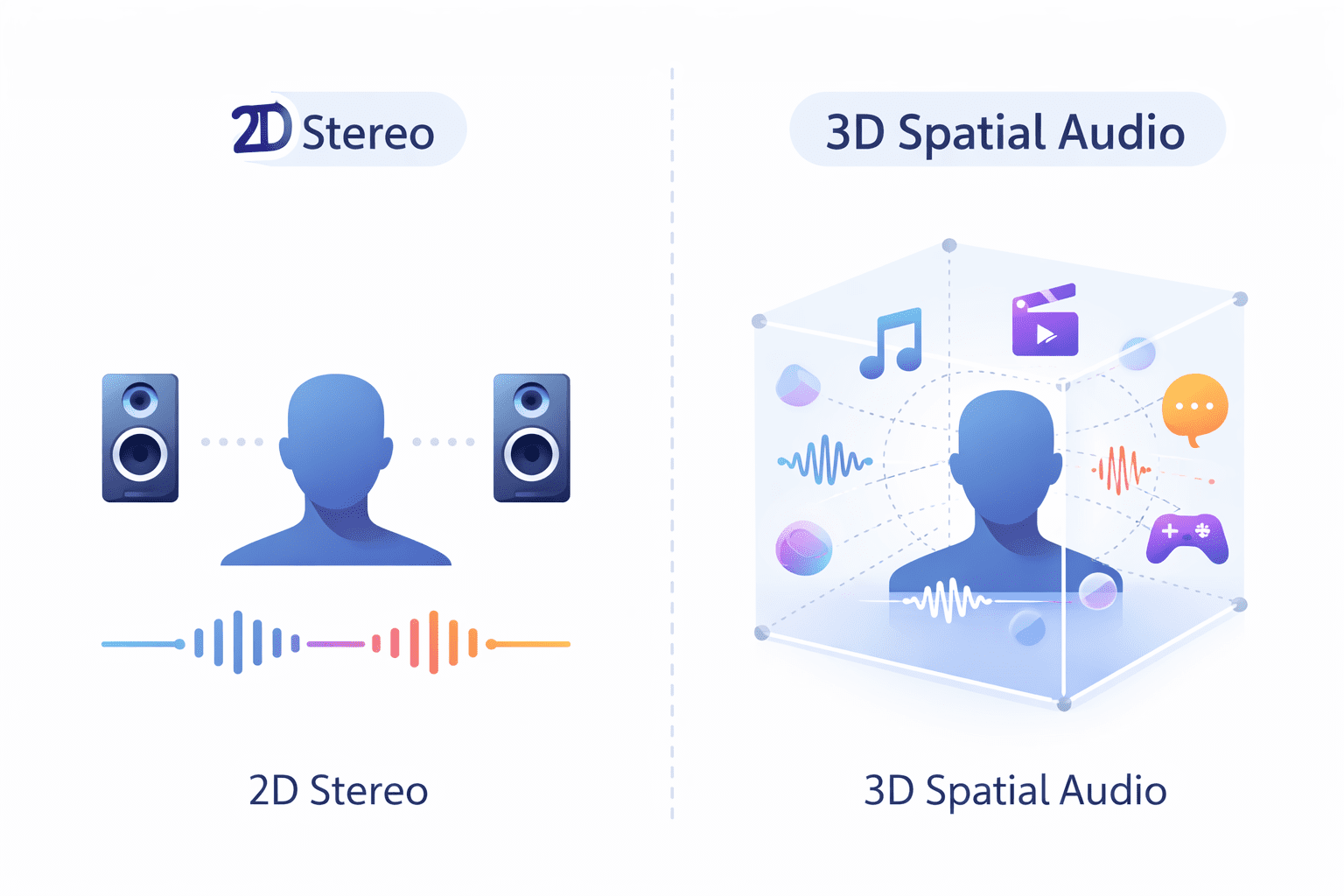
Before we talk about the money, we must understand the product. Unlike stereo, which pans sound between two speakers, Spatial Audio allows sounds to be placed as “objects” in a 3D space. Imagine a listener feeling like the drums are behind them, the vocals are floating above them, and the guitar is circling their head.
This isn’t just a gimmick; it’s a fundamental change in how humans consume media. Major players like Apple, Amazon, and Sony have invested billions into this technology because it increases “listener retention”—a key metric in Spatial Audio Monetization.
3. Why DSPs are Paying More for Immersive Tracks
Here is a secret most indie artists don’t know: Apple Music and Amazon Music give a royalty boost to tracks available in Spatial Audio.
Why? Because these platforms want to sell high-end hardware (AirPods Pro, HomePods, Echo Studio). By providing Spatial Audio content, you are helping these tech giants sell their products. In return, their algorithms prioritize your music in “Spatial Audio” curated playlists, leading to higher play counts and, consequently, higher payouts. According to Billboard’s Report on Spatial Audio Trends, tracks mixed in Dolby Atmos see up to a 10-15% increase in total play time compared to their stereo counterparts.
4. The Lucrative World of Spatial Sync Licensing
Sync licensing (placing music in TV, Film, and Ads) has always been a top-tier monetization strategy. However, the competition for standard stereo tracks is fierce.
By offering a “Spatial Mix” or a “Binaural Version” of your tracks, you enter a “Blue Ocean” market. Modern streaming platforms like Netflix and Disney+ now require Dolby Atmos mixes for their original content. If you can provide a high-quality immersive file, you can charge a premium “Spatial Delivery Fee” on top of your standard sync fee. This is a core pillar of Spatial Audio Monetization.
5. Monetizing “Aural Care”: Meditation and Sleep Niches
One of the fastest-growing sectors in the music business is “Functional Music.” This includes meditation sounds, deep sleep frequencies, and ASMR.
When delivered in Spatial Audio, these experiences become 10x more effective. A listener looking for a “Forest Meditation” wants to feel like they are actually in the forest. By creating and monetizing immersive soundscapes, you can tap into apps like Calm or Headspace, which are actively looking for high-quality immersive content. This niche has extremely low competition compared to “Lo-Fi Hip Hop.”
6. Virtual Reality (VR) and the Metaverse Goldmine
The Apple Vision Pro and Meta Quest 3 have changed the game. VR is entirely dependent on “Spatial Sound” to create a sense of presence.
As a music creator, you can monetize your skills by:
-
Creating spatial soundtracks for VR games.
-
Selling “Immersive Sound Packs” to VR developers.
-
Hosting virtual concerts where the audio moves with the user’s head tracking.
Earn Big: The Ultimate Guide to Sell Independent Artist Growth Kits & Master Music Monetization
7. High-Ticket Services: Mixing for Other Artists
If you have the technical skills to mix in Dolby Atmos, you possess a rare and valuable commodity. Most home studio owners don’t have the 7.1.4 speaker setup or the software knowledge to create spatial mixes.
You can charge anywhere from $300 to $1,500 per song to convert an artist’s old stereo stems into a modern Spatial Audio masterpiece. This service-based model is a reliable way to generate immediate cash flow while your own royalties grow.
8. How to Distribute Spatial Audio for Maximum Profit
Not all distributors support Dolby Atmos. To successfully execute Spatial Audio Monetization, you need to use distributors like:
-
DistroKid: Offers Atmos uploads for a small fee.
-
TuneCore: Has integrated Spatial Audio distribution.
-
AudioSalad: Preferred by labels for high-end delivery.
Ensure your metadata is correctly tagged as “Spatial” or “Atmos” to trigger the royalty bonuses on Apple Music.
9. Equipment and Software: The Minimalist Entry Guide
You don’t need a $100,000 studio to start. Thanks to “Binaural Rendering,” you can now mix Spatial Audio on headphones.
-
Software: Logic Pro (has built-in Dolby Atmos), Studio One, or Pro Tools.
-
Plugins: Waves Nx, DearVR Monitor, or Dolby Atmos Renderer.
-
Headphones: Open-back headphones (like Sennheiser HD600) are essential for accurate 3D placement.
Dolby’s Official Guide to Mixing at Home
10. Marketing Your Immersive Brand to High-End Audiences
When marketing your music, don’t just say “Listen to my new song.” Say “Experience my music in 3D.”
Target high-end audiophile communities and tech-savvy listeners who own premium headphones. Use social media platforms like YouTube (which supports Spatial Audio) to demonstrate the “3D Effect.” This positioning moves you away from being a “starving artist” and toward being a “Premium Audio Creator.”
11. Intellectual Property and Royalties in a 3D Space
As you scale your Spatial Audio Monetization business, protect your assets. Ensure your contracts specify who owns the “Immersive Master.” Sometimes a label may own the stereo master but not the spatial derivative. Consult a music attorney to ensure you are capturing every penny from these new formats.
12. Conclusion: The First-Mover Advantage
The music industry is at a crossroads. The transition from Stereo to Spatial is as significant as the transition from Mono to Stereo. By adopting Spatial Audio Monetization early, you position yourself as a leader in a niche that is currently underserved and under-discussed.
Start by experimenting with binaural mixes, upgrade your distribution, and target the high-growth sectors of VR and Meditative soundscapes. The future of sound is not just louder—it’s deeper, wider, and far more profitable.