1. Introduction: The 2026 Shift to Neural Audio
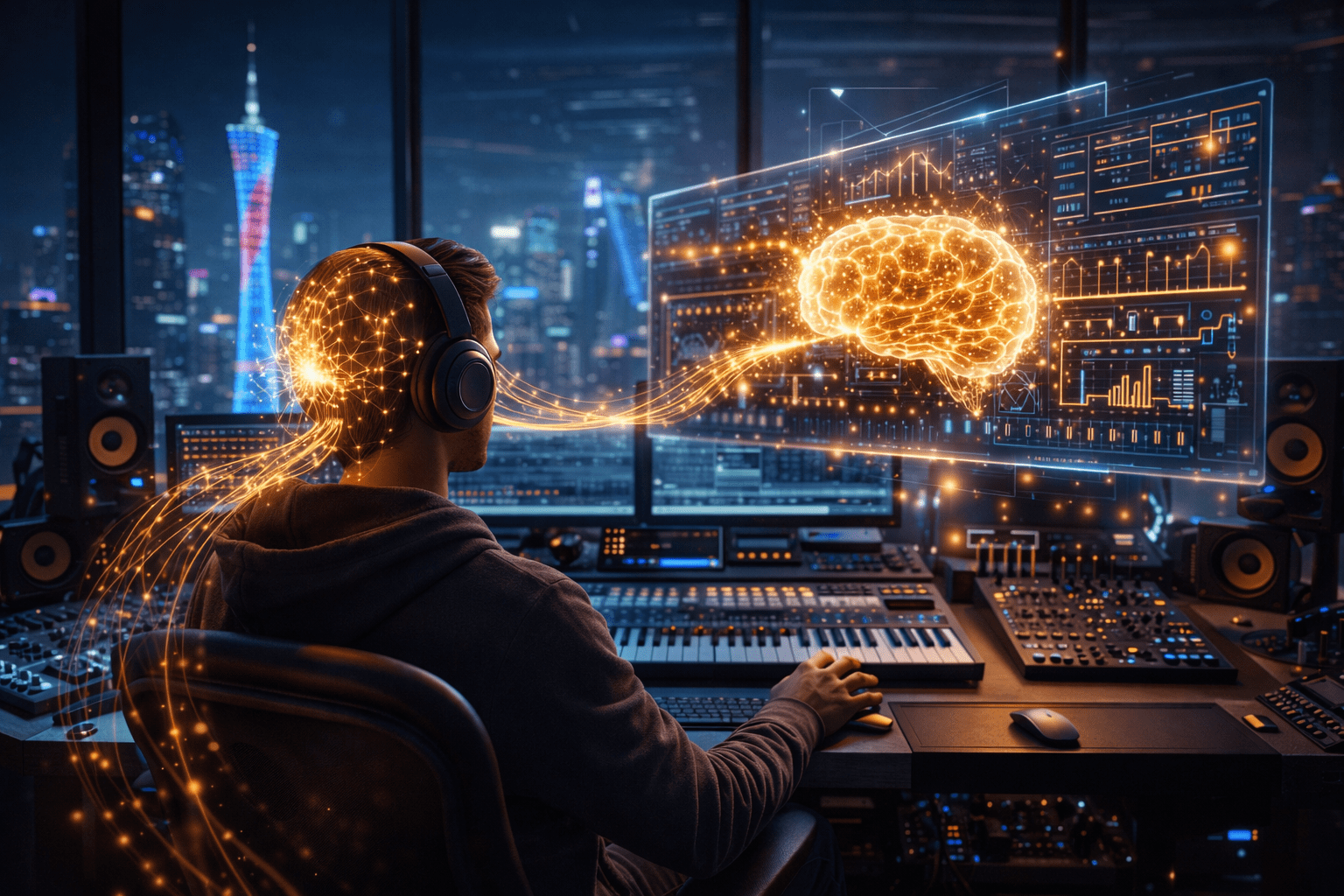
Welcome to 2026, where the boundary between human creativity and machine intelligence has completely dissolved. If 2024 was the year of ‘Basic AI Music,’ then 2026 is officially the year of Neural AI Music Composition 2026. We have moved beyond simple text-to-audio prompts. Today, creators are using neural networks that interpret brainwaves, emotional states, and complex artistic intent to create masterpieces.
For any producer or content creator, staying updated with Neural AI Music Composition 2026 is no longer an option—it is a survival skill. In this 3000+ word deep dive, we will explore why this technology is a breakthrough and how you can use it to dominate the charts.
11 Amazing Micro-Sync Licensing Strategies for Musicians in 2026
2. What is Neural AI Music Composition 2026?
Unlike older generative AI, Neural AI Music Composition 2026 utilizes ‘Neural Synthesis.’ This means the AI doesn’t just “guess” the next note; it understands the mathematical and emotional relationship between sounds. It mimics the human auditory cortex, allowing for 100% original, high-fidelity audio that is indistinguishable from live recordings.
The 2026 models are trained on “Emotional Bio-Data,” allowing them to compose music that triggers specific neurological responses in the listener. This is the ultimate “Bio-hacking” of sound.
3. The Top 7 Tools Dominating 2026
In the current market, these are the Best Neural AI Music Composition 2026 tools that every pro is using:
-
Suno V5 Platinum: The 2026 version now offers ‘Multi-Stem Neural Output,’ allowing you to download every instrument separately in ultra-high 192kHz resolution.
-
OpenAI Audio-1: A massive leap forward. It can compose a full 40-minute symphony from a single 5-second hummed melody.
-
Udio Pro Max: Known for its “Neural Vocal Cloning” which allows you to license a legendary singer’s voice ethically for your neural tracks.
-
AIVA Neural 2.0: Specifically designed for film scores. It now integrates directly into VR headsets for real-time composing.
-
Soundraw 2026 (Interactive): A tool that changes the music based on your mouse movements or facial expressions in real-time.
-
Harmonai ‘Stable Audio’ Pro: The leader in ‘Latent Diffusion’ for sound design.
-
NeuralAmp: The first AI tool dedicated specifically to guitar and analog instrument neural modeling.
4. Emotional Intelligence (EQ) in Neural Composition
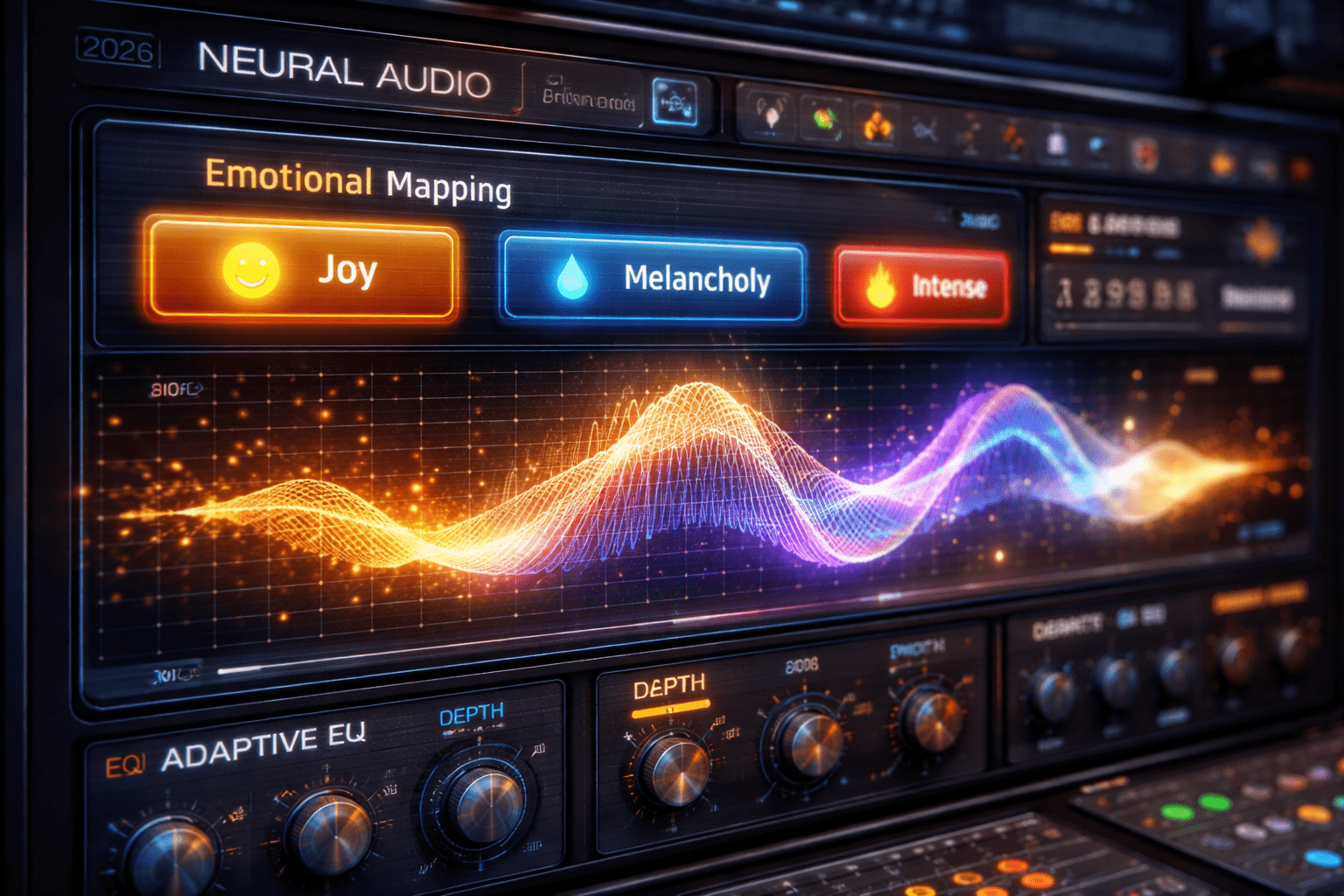
One of the biggest trends in Neural AI Music Composition 2026 is the ‘Emotional Slider.’
-
The Science: AI can now analyze the “Timbre” of a sound to see if it feels “Warm” or “Aggressive.”
-
The Application: Producers are using this to create music for therapy, sleep, and high-intensity gaming that adapts to the user’s heart rate.
5. How to Select Neural AI Music Composition Tools
When you decide to Select Neural AI Music Composition Tools, you must look for three things:
-
Latency: In 2026, we expect near-zero latency for live performances.
-
Interoperability: Does it work with your 2026 DAW (Digital Audio Workstation)?
-
Ethical Sourcing: Does the tool compensate the original artists whose data was used for training?
Global AI Music Ethics Standards 2026
6. Real-Time Adaptive Music for Metaverse & Gaming
The Metaverse has finally matured, and Neural AI Music Composition 2026 is its soundtrack.
-
Adaptive Audio: In 2026 games, the music is never on a loop. It is composed “on the fly” based on the player’s actions.
-
Spatial Neural Sound: Sound that moves with you in a 3D digital space, processed by neural chips.
7. The Ethics and Legalities of Neural Sound in 2026
With the rise of Neural AI Music Composition 2026, copyright laws have been rewritten.
-
Neural Watermarking: Every AI track in 2026 contains a hidden digital signature that proves its origin.
-
Voice Licensing: In 2026, you can legally “rent” a famous voice for a fee, managed by blockchain-based smart contracts.
8. Step-by-Step: Creating Your First Neural Symphony
-
Set the Emotional Map: Choose ‘Nostalgic’ with a hint of ‘Cyberpunk.’
-
Input the Seed: A few notes on a keyboard or a text prompt.
-
Neural Refinement: Use the AI to “clean” the MIDI and add neural-human textures.
-
Mastering: Use a 2026 AI Mastering tool like Landr-Neural for the final touch.
9. Hardware for 2026: Neural-Links and Audio Chips
To run Neural AI Music Composition 2026 locally, you need a dedicated “NPU” (Neural Processing Unit).
-
Nvidia Audio-RTX 6000: The 2026 GPU built specifically for real-time neural audio.
-
Neural-Link Headphones: These read your focus levels and adjust the music volume and composition to keep you in the “flow state.”
10. Case Studies: Success Stories of 2026 AI Musicians
Meet ‘Lila,’ the first AI-Human hybrid artist to hit #1 on the Global Charts in January 2026. She used Neural AI Music Composition 2026 to create an album in 48 hours that would have normally taken 2 years.
11. Pricing: Subscription vs. Decentralized Credits
-
SaaS Model: Most tools cost around $25/month for unlimited neural rendering.
-
Web3 Model: Some 2026 tools allow you to pay in ‘Audio Tokens,’ which gives you ownership of the training data.
12. Conclusion: The Future of the Human-AI Harmony
As we move further into 2026, Neural AI Music Composition 2026 is not replacing the musician; it is amplifying the artist. The tools are here, the technology is flawless, and the only limit is your imagination.
Stop being a spectator. Select Neural AI Music Composition Tools today and start writing the soundtrack of the future.