Introduction
The low-end is the heart and soul of modern music. Whether it’s the chest-thumping thump of a kick drum in a dance track or the deep, resonant growl of a bassline in hip-hop, a powerful and clear low-end is paramount. Yet, for many music producers and mixing engineers, Mastering Low-End Mixing 2026 remains the most elusive challenge. A poorly mixed low-end can make your track sound muddy, weak, or simply untranslatable across different playback systems. This comprehensive guide will equip you with 15 pro tips to achieve a tight, impactful, and perfectly balanced low-end in your mixes, specifically tailored for the demands of modern genres in 2026.
11 Amazing Micro-Sync Licensing Strategies for Musicians in 2026
The Critical Importance of Mastering Low-End Mixing 2026
In an era dominated by streaming platforms and diverse listening environments (from AirPods to massive club sound systems), a well-controlled low-end dictates how professional your track sounds. Poor low-end control can lead to fatigue, phase issues, and a mix that falls apart outside your studio. The demand for clear, punchy, yet deep low frequencies is higher than ever, making Mastering Low-End Mixing 2026 a non-negotiable skill for any serious producer.
Understanding the Low-End Frequencies
Before we dive into the techniques, let’s understand the battlefield. The low-end typically occupies frequencies from 20Hz to around 200-250Hz.
-
Sub-Bass (20Hz-60Hz): Felt more than heard. This is the realm of massive subwoofers and body-shaking energy.
-
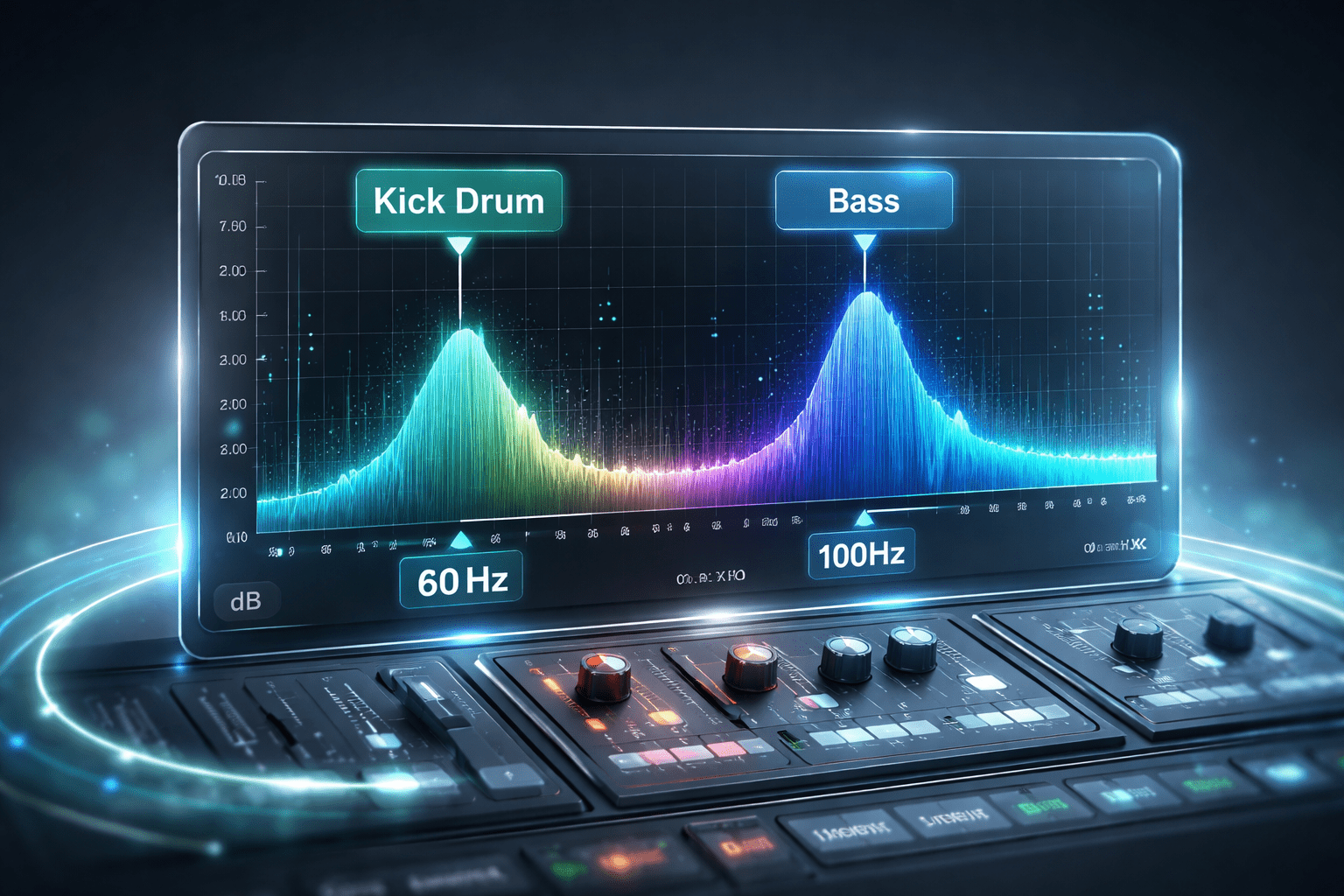
Bass (60Hz-250Hz): The fundamental notes of your bass instruments and the “punch” of your kick drum. This is where most of the fight for space happens.
Deep Dive into Audio Frequencies by SoundGuys
Tip 1: Start with Great Sounds (Sound Selection is King)
The first, and arguably most crucial, step in Mastering Low-End Mixing 2026 isn’t mixing – it’s sound selection.
-
Pro Tip: Choose a kick drum that already has the desired character (punch, sustain) and a bass sound that naturally sits well with it. Trying to sculpt a bad sound into a good one is an uphill battle.
-
Actionable Step: Layering: Sometimes, combining a kick drum for its attack with another for its sub-bass tail works wonders.
Tip 2: The Art of EQ Subtraction (Creating Space)
Before you boost, cut. This is a golden rule for Mastering Low-End Mixing 2026.
-
The Strategy: Use high-pass filters (HPF) on almost every track that isn’t a kick or bass. Gently roll off frequencies below 80-150Hz on guitars, vocals, synths, etc., to make room for your low-end elements.
-
Focus Point: Find the resonant frequencies in your kick and bass and gently cut them with a narrow Q. This clears muddiness without losing power.
Tip 3: Sidechain Compression (The Ducking Dance)
The classic technique for Mastering Low-End Mixing 2026 is sidechain compression.
-
How it works: When the kick hits, it temporarily ducks the volume of the bass (or other instruments) to create rhythmic space.
-
Modern Approach: Don’t overdo it. A subtle ducking (2-3dB gain reduction) can be enough to create clarity without making the bass disappear.
Future of Global Music Trends 2026: 7 Amazing Artist News Updates
Tip 4: Phase Alignment (The Low-End Destroyer or Savior)
Phase issues can instantly obliterate your low-end. This is a critical aspect of Mastering Low-End Mixing 2026.
-
The Problem: If your kick and bass are out of phase, their low frequencies cancel each other out, leading to a weak or non-existent bottom end.
-
The Fix: Use a phase rotation plugin (like Little Labs IBP) or manually nudge the waveforms until they are in sync, especially for their transients.
Tip 5: Saturation and Harmonic Excitement
Sometimes, the low-end needs to be heard on smaller speakers, not just felt. This is where saturation comes in for Mastering Low-End Mixing 2026.
-
The Hack: Apply saturation to your bass. This adds upper harmonics that make the bass audible on devices without subwoofers (e.g., phone speakers, laptop speakers).
-
Caveat: A little goes a long way. Over-saturation can make your low-end sound thin or buzzy.
Tip 6: Sub-Harmonic Generators (Creating Foundation)
For a truly massive sub-bass, consider using a sub-harmonic generator.
-
The Tool: Plugins like Waves Renaissance Bass (RBass) or MaxxBass, or Logic’s SubBass.
-
Application: Apply sparingly to kick or bass to generate frequencies below their fundamental, adding depth to your Mastering Low-End Mixing 2026.
Advanced Mixing Techniques from Pensado’s Place
Tip 7: Multiband Compression (Surgical Control)
Multiband compression offers granular control for Mastering Low-End Mixing 2026.
-
The Strategy: Compress only the low frequencies (e.g., 20-100Hz) of your bass or kick if they are too boomy or uncontrolled, leaving the higher frequencies untouched.
-
Benefit: Keeps the low-end tight and consistent without affecting the punch or clarity of the mid-range.
Tip 8: Bus Processing (Glueing the Low-End Together)
Don’t just process individual tracks. Send your kick and bass to a “Low-End Bus.”
-
The Hack: Apply a gentle compressor or EQ to this bus. This helps them “glue” together and sound like one cohesive unit, crucial for Mastering Low-End Mixing 2026.
-
Recommendation: A subtle amount of saturation on the low-end bus can also make them feel more connected.
Tip 9: Referencing (The Ultimate Reality Check)
Your studio monitors might lie, but a good reference track won’t. This is a non-negotiable step in Mastering Low-End Mixing 2026.
-
The Method: Compare your mix’s low-end to professionally mixed tracks in the same genre.
-
Listen For: Is their kick punchier? Is their bass clearer? Does your low-end translate well on different systems?
Kick vs. Bass: The Frequency Dance
| Element | Primary Frequencies | Role | Common Issues |
| Kick Drum | 40-80Hz (Sub), 100-200Hz (Punch) | Rhythm, Impact | Muddiness, Weakness |
| Bass Line | 60-250Hz (Fundamental), 250-500Hz (Harmonics) | Harmony, Groove | Boomy, Lost in mix |
Tip 10: Using a Spectrum Analyzer (Visualizing the Low-End)
Your ears are paramount, but a visual aid helps.
-
The Tool: Use a spectrum analyzer (like FabFilter Pro-Q 3 or Waves F6) to see where your low-end elements are sitting.
-
Goal: Look for excessive build-ups or holes. Aim for a relatively smooth slope from the low-end upwards. This aids in Mastering Low-End Mixing 2026.
Tip 11: Transient Shapers (Sculpting the Punch)
For more control over the kick drum’s attack and sustain, use a transient shaper.
-
The Hack: Increase the “attack” to make the kick punch through the mix. Decrease the “sustain” to make it tighter and less boomy.
-
Application: Excellent for ensuring your kick drum cuts through dense arrangements.
11 Best Organic Soundscapes Hybrid DJing 2026: The Ultimate Pro News Guide
Tip 12: Stereo Width vs. Mono Low-End
A fundamental principle for Mastering Low-End Mixing 2026 is keeping the low frequencies mono.
-
The Rule: Keep everything below 100-150Hz strictly mono. Stereo information in the low-end can cause phase issues and a weak bottom end on many playback systems.
-
The Tool: Use a stereo imager plugin (like iZotope Ozone’s Imager or FabFilter Pro-Q’s Mid/Side mode) to collapse low frequencies to mono.
Tip 13: Room Acoustics and Listening Environment
You can’t mix what you can’t hear. Your room is the biggest “plugin.”
-
The Problem: Untreated rooms have standing waves and nulls that distort your perception of the low-end.
-
The Solution: Invest in acoustic treatment (bass traps!) and mix at moderate volumes. This is foundational for Mastering Low-End Mixing 2026.
Tip 14: Don’t Over-Process (Less Is Often More)
The most common mistake in Mastering Low-End Mixing 2026 is over-processing.
-
The Trap: Applying too many EQs, compressors, or saturation plugins can destroy the natural dynamics and clarity.
-
The Mantra: Make small, subtle adjustments. If it sounds good, it is good.
Tip 15: Take Breaks and Reset Your Ears
Ear fatigue is real, especially when dealing with the low-end.
-
The Hack: Step away from your mix for 15-20 minutes every hour. Listen to other music. Your ears will reset, and you’ll come back with fresh perspective for Mastering Low-End Mixing 2026.
Common Low-End Mistakes to Avoid
-
Mixing too loud: Leads to misjudgment of bass levels.
-
No referencing: Your mix won’t translate to the real world.
-
Ignoring phase: Weak, muddy, or disappearing low-end.
-
Not using HPF: Too much low-end rumble in unnecessary tracks.
-
Over-compressing: Killing the dynamics and punch.
The Future of Low-End Mixing in 2026
AI-powered mixing assistants are emerging, but they are tools, not replacements. They can suggest starting points, but the human ear and artistic decision-making remain paramount for truly Mastering Low-End Mixing 2026. The trend is toward cleaner, more impactful, and genre-specific low-ends that shine on all platforms.
Frequently Asked Questions (FAQs)
Q1: What’s the best frequency range for a kick drum in modern genres?
A: For sub-bass, 40-60Hz; for punch, 100-150Hz. But always listen and adjust to the track for Mastering Low-End Mixing 2026.
Q2: Should my bass be louder than my kick?
A: Not necessarily. They should complement each other. Often, the kick has more transient impact, while the bass provides sustained presence.
Q3: Can I mix low-end on headphones?
A: It’s challenging. Headphones can deceive. Always cross-reference your low-end on good monitors and various other systems for Mastering Low-End Mixing 2026.
Q4: What’s the difference between sub-bass and bass?
A: Sub-bass (20-60Hz) is felt more than heard. Bass (60-250Hz) provides the fundamental pitch and warmth of low-end instruments.
Q5: How do I know if my low-end is “too much”?
A: If your mix sounds muddy, loses clarity on smaller speakers, or causes listener fatigue, your low-end might be too loud or uncontrolled.
Conclusion
The journey to Mastering Low-End Mixing 2026 is a continuous one, demanding patience, keen ears, and a strategic approach. By implementing these 15 pro tips, you’re not just learning techniques; you’re developing an understanding of how frequencies interact to create a powerful and professional sound. Don’t let the low-end be your mix’s Achilles’ heel. Embrace these strategies, practice diligently, and your tracks will boast a formidable bottom end that resonates with listeners everywhere.