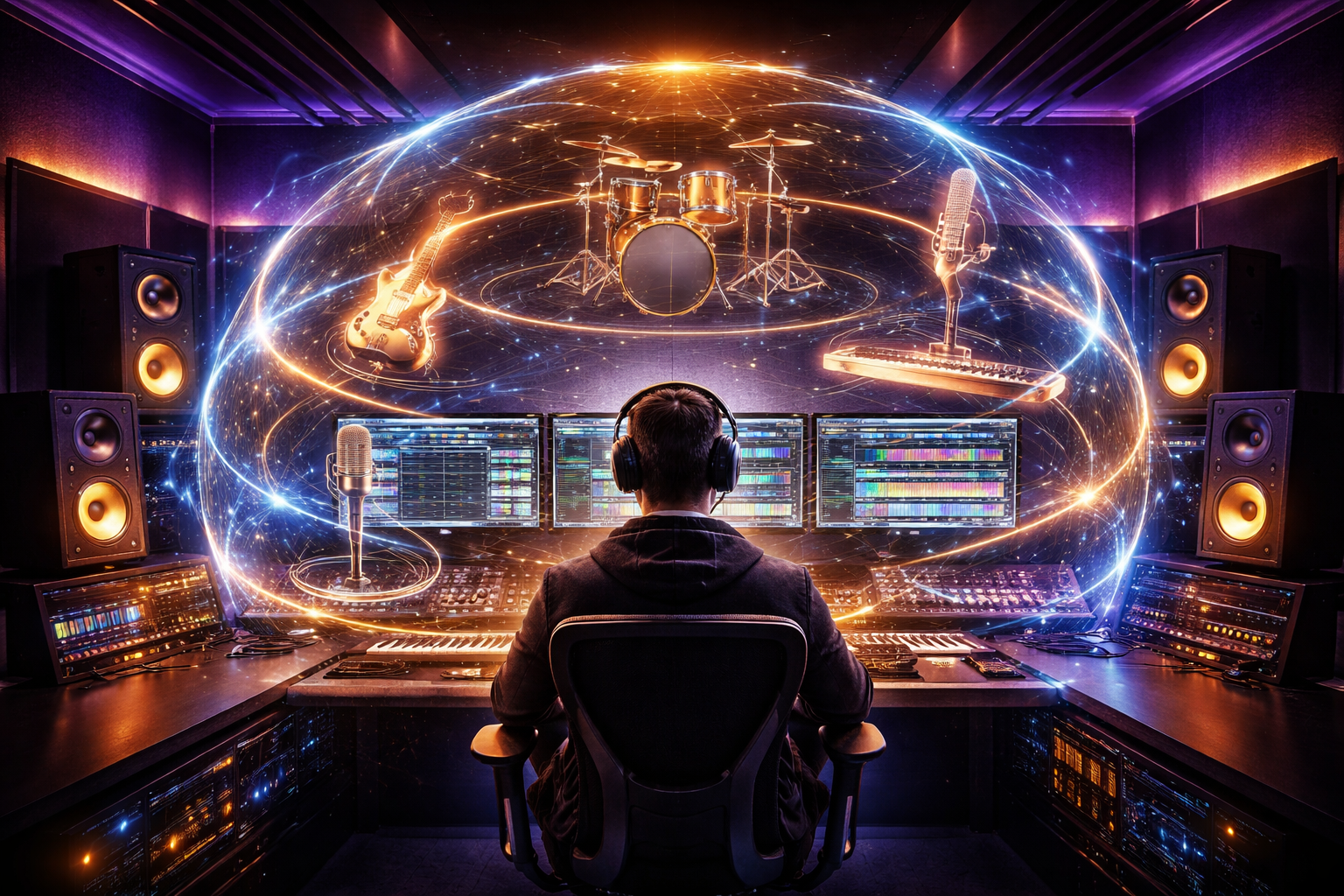
The era of Stereo is officially evolving into something much deeper. In 2026, the standard for professional music is no longer just Left and Right; it is 360-degree immersion. Pro Spatial Audio Mixing 2026 (often referred to as Dolby Atmos or Object-Based Audio) has become the most requested service in recording studios worldwide. Listeners are now using spatial-enabled headphones and car systems, demanding an experience that makes them feel like they are standing in the middle of the band.
At DJRM Music, we help you stay ahead of the technical curve. In this 2000-word deep-dive, we explore the 11 Best strategies for Pro Spatial Audio Mixing 2026 and how you can transform your “flat” mixes into living, breathing 3D masterpieces.
1. The Transition from Panning to Positioning
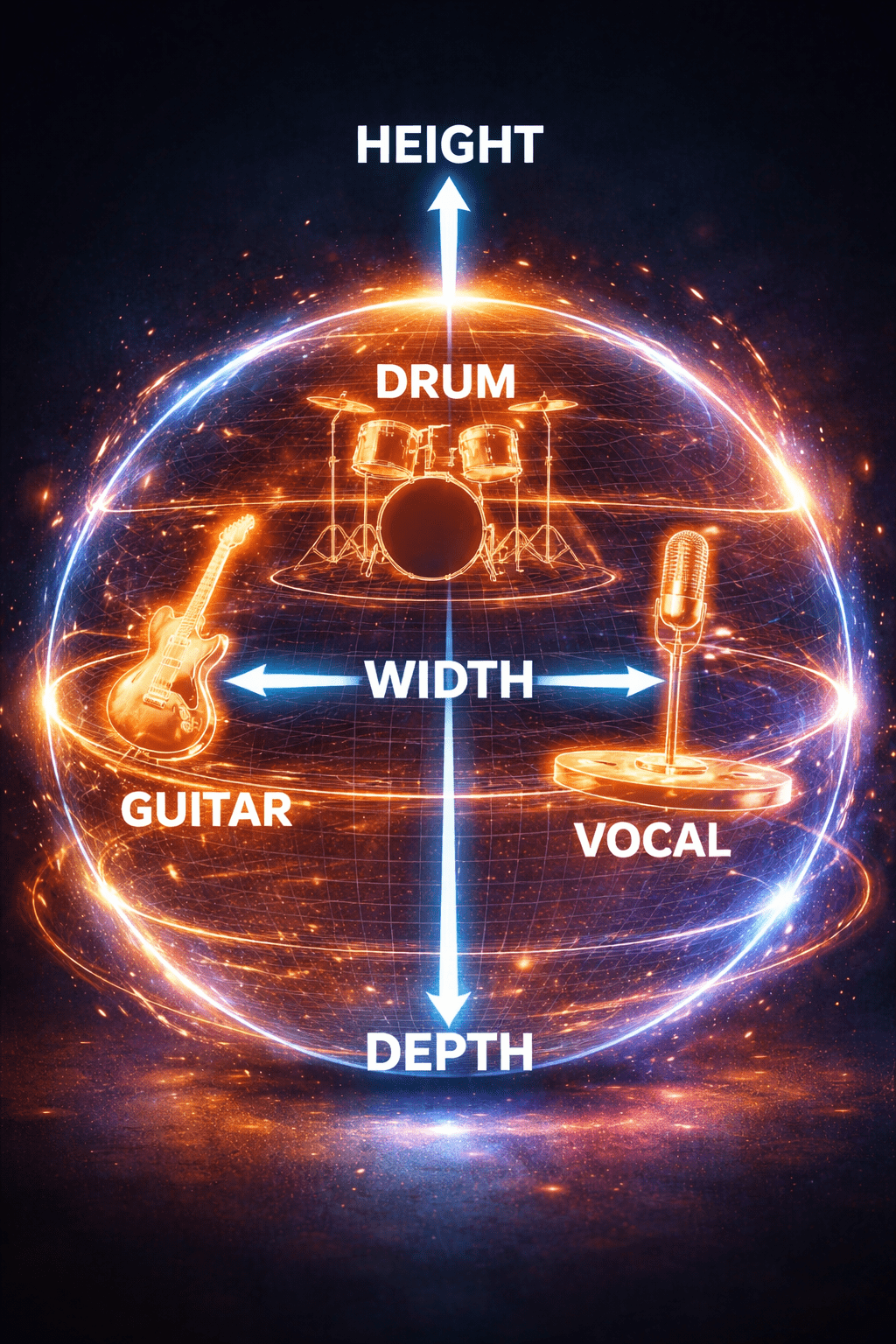
In traditional mixing, we pan sounds left or right. In Pro Spatial Audio Mixing 2026, we “position” objects. This means you can place a vocal not just to the left, but above the listener or behind their left shoulder.
The Best way to approach a Pro spatial mix is to visualize a sphere around your head. Every instrument is an object that can move freely within that sphere. This freedom is the foundation of Pro Spatial Audio Mixing 2026, allowing for a clarity of separation that stereo could never achieve.
2. Mastering the “Z-Axis” (Height)
The “Z-Axis” represents height, and it is the secret weapon of Pro Spatial Audio Mixing 2026. By moving atmospheric sounds like pads, overheads, or reverb tails to the “ceiling” of your mix, you free up massive amounts of space in the “ear-level” plane.
A Pro tip for 2026 is to keep your core rhythmic elements (Kick, Snare, Bass) at eye level, while using the height channels for “shimmer” and “ambience.” This vertical separation is a hallmark of high-end Pro Spatial Audio Mixing 2026.
Check our “DJ Gear & Gadgets Reviews” to find the best headphones for monitoring spatial audio mixes.
3. 11 Best Tips for Pro Spatial Audio Mixing 2026
To create a world-class immersive experience, here are the 11 Best Pro techniques for Pro Spatial Audio Mixing 2026:
-
Object-Based Automation: Don’t just set an instrument and leave it. Use slow, circular automation to make pads feel like they are swirling around the room.
-
Frequency Masking in 3D: Because you have more “space,” you can use less EQ. Instruments that clashed in stereo can now live in different physical positions in Pro Spatial Audio Mixing 2026.
-
Immersive Reverb Tails: Use specialized spatial reverbs that bloom from the front and decay toward the back of the room.
-
Vocals at the Center-Point: Keep the lead vocal “locked” to the front-center but use the “width” parameter to make it feel larger than life.
-
Phase Alignment for 360: In Pro Spatial Audio Mixing 2026, phase is critical. Ensure your “rear” objects are phase-aligned with the front to avoid a thin sound.
-
Binaural Monitoring: Always check your mix on high-end headphones using a Binaural renderer to ensure it “translates” for mobile listeners.
-
Z-Axis Percussion: Try placing shakers or high-hats slightly above the listener to add a “crisp” feeling to the high-end.
-
Sub-Bass Management: In spatial mixing, the LFE (Low Frequency Effects) channel is separate. Ensure your bass is powerful but doesn’t “leak” into the side channels.
-
Depth Perception using Delay: Use short “pre-delays” to move an instrument further away from the listener’s face.
-
Dynamic Object Tracking: For cinematic music, make the sound “follow” the visual movement using Pro spatial automation tools.
-
Mastering the “Fold-down”: Ensure your 3D mix still sounds Best when the system automatically converts it back to Stereo (Downmixing).

4. Studio Acoustics for Immersive Sound
You cannot mix what you cannot hear. For a Pro setup in Pro Spatial Audio Mixing 2026, your room needs to be treated for “Surround Symmetry.”
This means the reflections from the back of the room are just as important as the front. The Best studios in 2026 use “Diffusors” on the ceiling to help with the height-channel accuracy. Without proper treatment, your Pro Spatial Audio Mixing 2026 decisions will be based on “room lies.”
Visit “Dolby Professional” for the official hardware requirements for Atmos-certified mixing rooms.
5. Mixing for “The Headphone Generation”
While 7.1.4 speaker setups are the Pro standard, 90% of people will experience your Pro Spatial Audio Mixing 2026 on headphones.
This is called “Binaural Rendering.” The Best Pro tip here is to use “Head Tracking” gear during your mixing process. This allows you to turn your head and hear how the instruments stay fixed in space, ensuring your spatial cues are working correctly for the listener.
6. Analog Warmth in a 3D World
A common complaint about digital 3D mixing is that it can feel “sterile.” The Best Pro producers in 2026 are using “Analog Summing” before the spatial stage.
By running your stems through a high-end analog console or tube preamp, you add “Saturation” and “Harmonics.” When this warm sound is then placed in a Pro Spatial Audio Mixing 2026 environment, it creates a “Deep Analog” feel that is incredibly pleasing to the ear.
7. Object-Based vs. Bed-Based Audio
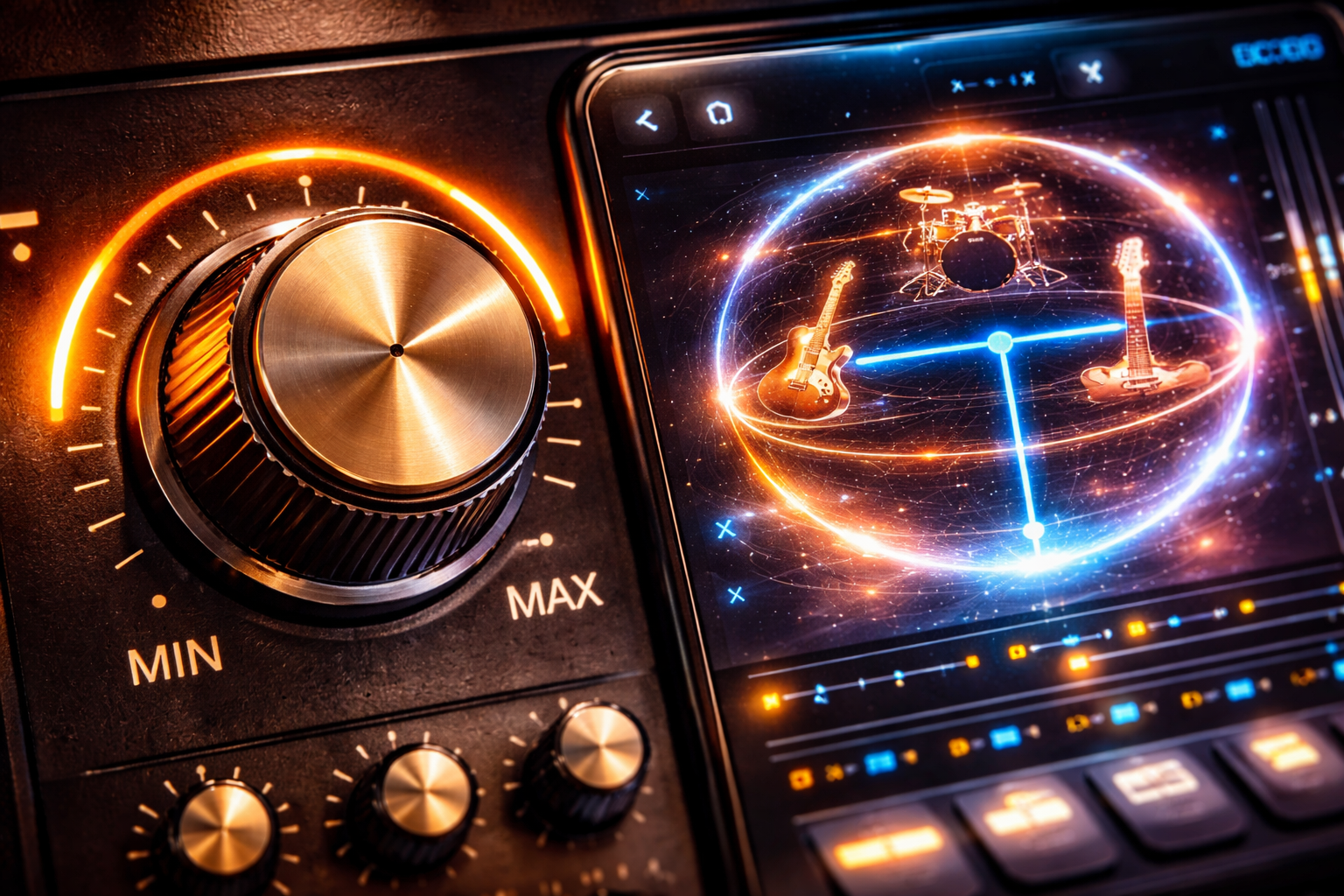
In Pro Spatial Audio Mixing 2026, you must choose between “Beds” (fixed channels like 7.1) and “Objects” (floating points).
The Best Pro strategy is to use Beds for your “Wall of Sound” (Guitars, Synths) and Objects for your “Highlight Elements” (Solos, Percussion, Vocals). This hybrid approach provides the most stable and exciting Pro Spatial Audio Mixing 2026 experience.
8. Managing the “Distance” Factor
Spatial audio software allows you to move sounds “further away.” However, as a sound moves away, it loses high frequencies (Air Dampening).
A Pro engineer in Pro Spatial Audio Mixing 2026 manually adjusts the Low-Pass Filter as an object moves “back” in the room. This realistic detail is what makes a mix feel “Expensive” and “High-Fidelity.”
Read “Sound on Sound” magazine’s deep dive into the latest immersive audio plugins of 2026.
9. Mastering for Spatial: The Final Frontier
Mastering a Pro Spatial Audio Mixing 2026 file is different from stereo mastering. You cannot just put a “Limiter” on the master bus.
You have to master the “ADM BWF” file, which contains all the object data. The Best Pro masters in 2026 focus on “Macro-Dynamics”—ensuring the overall “loudness” of the sphere is consistent without squashing the 3D movement of individual objects.
10. The Psychology of Immersive Listening
Why do people love Pro Spatial Audio Mixing 2026? It reduces “Listening Fatigue.” Because instruments are physically separated, the brain doesn’t have to work as hard to decode the music.
This leads to longer listening times and higher fan engagement. For an artist, Pro Spatial Audio Mixing 2026 is not just a tech trend; it is a way to create a deeper emotional bond with your audience.

11. Conclusion: Step Into the Sphere
In conclusion, Pro Spatial Audio Mixing 2026 is the future of music production. It has unlocked a third dimension of creativity that was previously impossible. By mastering these 11 Best Pro tips, you are moving from being a “Mixer” to being an “Architect of Sound.”
At DJRM Music, we believe that the Best music is music you can feel. Embrace the technology of Pro Spatial Audio Mixing 2026 and start building your own immersive worlds today. The sphere is waiting for you.