In the modern digital landscape, relying solely on streaming royalties from platforms like Spotify or Apple Music is no longer enough for most creators. The real “gold mine” for musicians today lies in Music Licensing for Independent Artists 2026. Sync licensing—the process of placing your music in movies, TV shows, commercials, and video games—can provide the financial freedom every artist dreams of.
At DJRM Music, we recognize that the business side of music is just as important as the creative side. Understanding the nuances of Music Licensing for Independent Artists 2026 can turn your passion into a highly profitable career. This guide will reveal the 12 secret strategies you need to master to get your music heard by music supervisors and start earning significant royalties.
1. Understanding the Core of Music Licensing for Independent Artists 2026
Sync licensing (short for synchronization) is the act of syncing your audio to a moving image. In Music Licensing for Independent Artists 2026, there are two main types of rights you need to own or control:
-
Master Rights: The ownership of the actual sound recording.
-
Publishing Rights: The ownership of the underlying composition (lyrics and melody).
For an independent artist, the biggest advantage is being “One-Stop.” This means you own both rights, making it incredibly easy for a music supervisor to clear your song quickly. Speed is everything in Music Licensing for Independent Artists 2026.
2. Why Sync Licensing is the Best Monetization Strategy in 2026
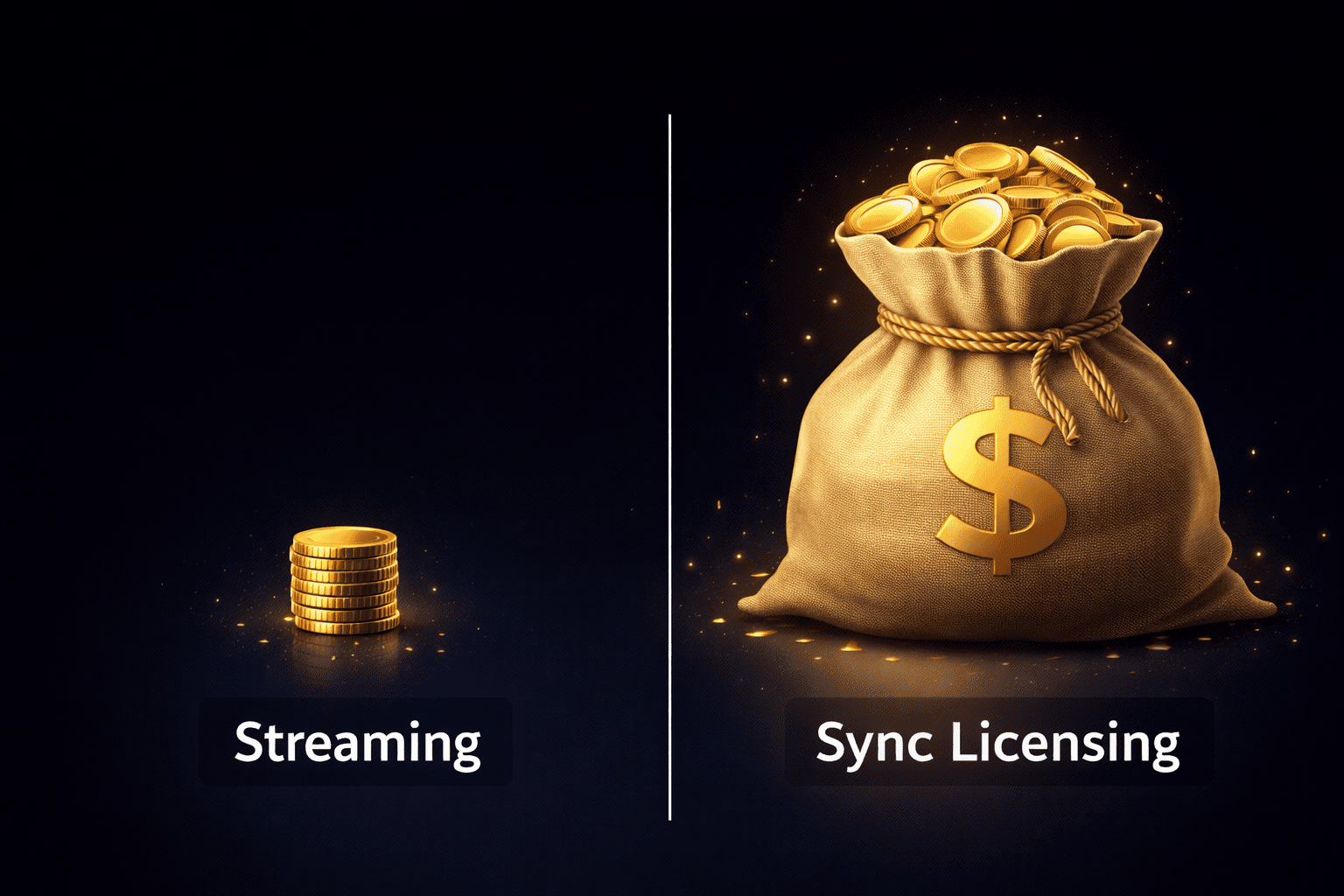
Unlike streaming, which pays fractions of a penny, Music Licensing for Independent Artists 2026 can pay thousands of dollars for a single placement. A 30-second clip of your song in a national car commercial could pay more than 10 million streams ever would.
Furthermore, sync placements provide massive exposure. Many artists have seen their social media following explode after a song was featured in a popular Netflix series. Music Licensing for Independent Artists 2026 is not just about the upfront fee; it’s about the long-term “Performance Royalties” you receive every time that show or ad is aired.
3. Preparing Your Music for Licensing: The “Metadata” Secret
You might have the best song in the world, but if your metadata is wrong, you will never get a deal in Music Licensing for Independent Artists 2026. Music supervisors use search engines to find tracks.
Essential Metadata for Music Licensing for Independent Artists 2026:
-
Genre and Mood: (e.g., Dark, Cinematic, Upbeat, Indie Pop).
-
Contact Information: Your email must be in the “Comments” tag of the MP3/WAV file.
-
Lyrics and Themes: (e.g., Breakup, Celebration, Overcoming obstacles).
If a supervisor finds your track but can’t find your email address within 5 seconds, they will move on to the next artist.
4. The Importance of Instrumental Versions
In Music Licensing for Independent Artists 2026, having an instrumental version of every track is non-negotiable. Often, a director loves the vibe of your song but finds that the vocals clash with the actor’s dialogue.
If you don’t have an instrumental ready to go, you lose the deal. Always keep your stems and “TV Mixes” organized as part of your Music Licensing for Independent Artists 2026 workflow.
5. Finding the Right Music Libraries and Sync Agents
You don’t have to do it all alone. Many Music Licensing for Independent Artists 2026 success stories involve working with “Sync Libraries” or “Music Publishers.”
-
Exclusive Libraries: They own the rights to pitch your music exclusively, often resulting in higher-quality placements.
-
Non-Exclusive Libraries: You can submit the same song to multiple libraries, increasing your chances of “Micro-Sync” placements (like YouTube or wedding videos).

6. How to Reach Out to Music Supervisors
Music supervisors are the gatekeepers of Music Licensing for Independent Artists 2026. However, they are also incredibly busy.
Tips for a Successful Cold Email:
-
Be Brief: Get straight to the point.
-
Use Streaming Links: Never attach large files to an email. Use DISCO or SoundCloud links.
-
Mention “One-Stop”: As mentioned before, this is a huge selling point in Music Licensing for Independent Artists 2026.
7. Performance Rights Organizations (PROs): Get Paid Twice!
To succeed in Music Licensing for Independent Artists 2026, you must be registered with a PRO like BMI, ASCAP, or PRS.
The PRO is responsible for collecting your “Performance Royalties” whenever your song is played on TV or in a public venue. In the world of Music Licensing for Independent Artists 2026, the “Sync Fee” is just the tip of the iceberg; the backend royalties from a PRO can continue for decades.
8. Understanding “Micro-Sync” and Social Media Monetization
Don’t ignore smaller platforms. In Music Licensing for Independent Artists 2026, “Micro-Sync” refers to your music being used in user-generated content on TikTok, Instagram Reels, and YouTube.
While individual payments are small, the sheer volume of users can lead to a significant income stream. Ensure your music is registered with “Content ID” systems so that you get a share of the ad revenue whenever someone uses your song in their video.
9. The Impact of AI on Music Licensing in 2026
AI is changing Music Licensing for Independent Artists 2026 in two ways. First, supervisors are using AI to find music faster. Second, there is a rising demand for “AI-Assisted” music that can be customized quickly for a specific scene.
As an artist at DJRM Music, using AI to speed up your production process (like creating clean stems or alternate endings) can give you a massive edge in the competitive world of Music Licensing for Independent Artists 2026.
10. Copyright and Legal Safety: Protecting Your Assets
Before you pitch for Music Licensing for Independent Artists 2026, ensure your copyright is solid. Never use uncleared samples in your music. If you use a sample that isn’t licensed, and that song gets placed in a movie, you could face a massive lawsuit that wipes out all your earnings.
Always create original music or use 100% royalty-free samples as part of your Music Licensing for Independent Artists 2026 strategy.
11. Networking: The Human Side of the Music Business
While much of the work is digital, Music Licensing for Independent Artists 2026 is still a relationship business. Attend music conferences like SXSW or NAMM. Meet music supervisors in person. A face-to-face connection often leads to more opportunities than 1,000 cold emails.
Read more about copyright laws and music registration at the U.S. Copyright Office.
12. Building a “Sync-Ready” Catalog Over Time
The final secret to Music Licensing for Independent Artists 2026 is volume. One song might get lucky, but a catalog of 100 high-quality, meta-tagged tracks is a business.
Focus on creating “Sync-Friendly” music—songs that have universal themes and clear structures. Over time, your catalog will become a passive income machine, paying you while you sleep.
Conclusion: Your Path to Financial Freedom
Music Licensing for Independent Artists 2026 is perhaps the most sustainable way to build a career in the modern music industry. It rewards quality, organization, and persistence. By following the 12 secrets outlined in this guide, you are moving away from being “just a musician” and becoming a “music business owner.”
At DJRM Music, we are excited to see our community thrive. The world is waiting for your sound—get it licensed, get it heard, and get paid what you deserve. Your journey into Music Licensing for Independent Artists 2026 starts with your very next track!