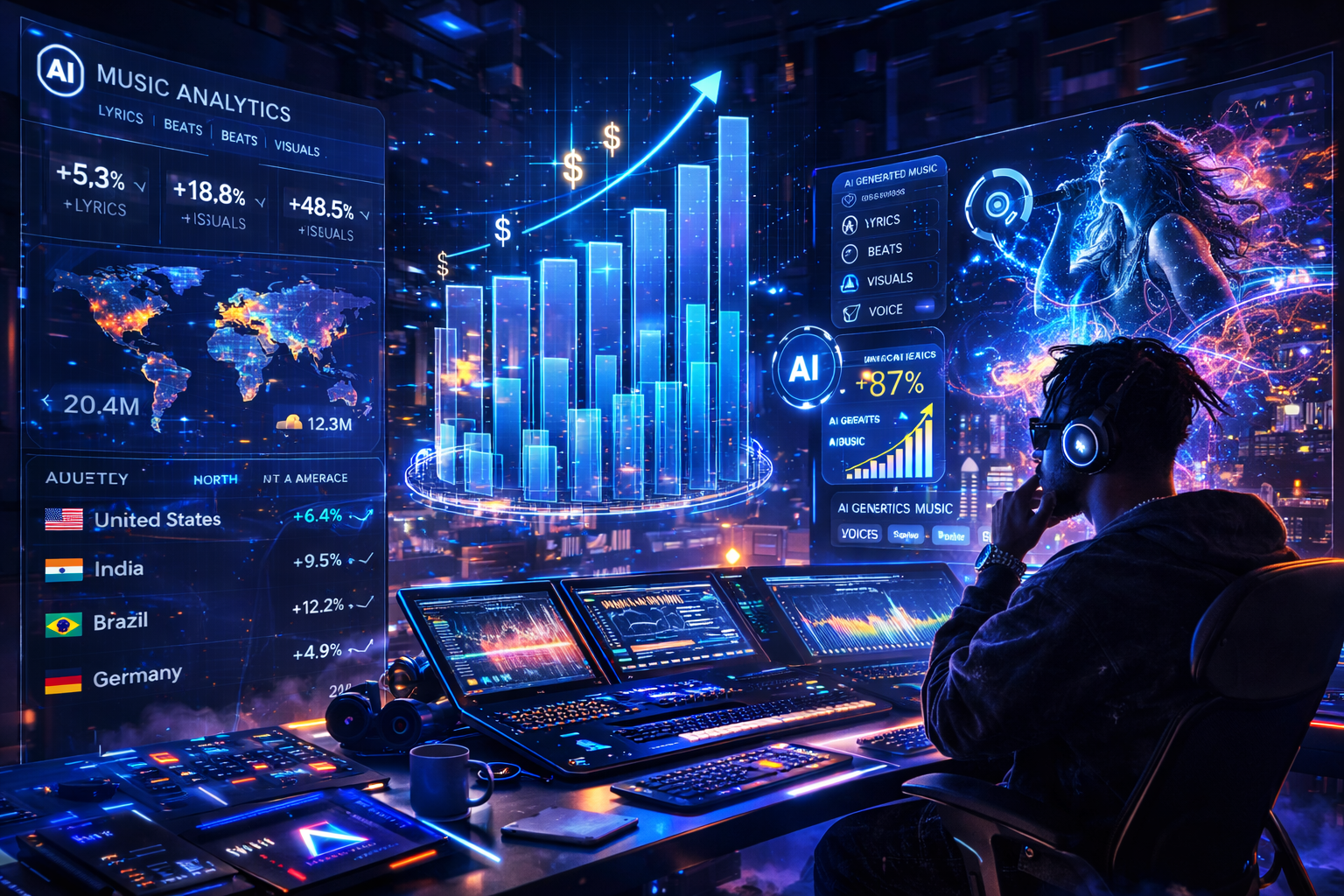
In 2026, going viral is no longer a matter of luck; it is a matter of math. Behind every “overnight success” on TikTok or Spotify, there is a mountain of data that was likely analyzed by sophisticated algorithms. For independent artists, understanding Music AI Analytics Tools is the difference between shouting into a void and speaking directly to a hungry audience.
If you want to stop guessing and start growing, you need to master the data. This guide will show you 7 powerful ways to use AI analytics to crack the algorithm and predict your next big hit.
1. The Shift from Hype to Data-Driven Success
In the old industry, labels spent millions on “street teams” to see what was trending. Today, Music AI Analytics Tools do this in milliseconds. By monitoring millions of data points across streaming platforms and social media, AI can identify a “rising spark” before it becomes a wildfire.
5 Best AI Songwriting Tools 2026: The Ultimate Creative Guide
As an artist, using these tools allows you to:
-
Identify Trigger Cities: Know exactly where your fans are based.
-
Optimize Ad Spend: Only put money where the data shows engagement.
-
Time Your Releases: Use predictive patterns to find the perfect launch date.
2. Predicting Virality with Predictive Modeling
The most advanced Music AI Analytics Tools now offer “Predictive Scoring.” Platforms like Chartmetric and Soundcharts use machine learning to give your song a “Virality Score” based on its early performance.
-
Velocity Tracking: If your song gets 500 Shazams in a specific city within 2 hours, the AI predicts a 90% chance of it hitting a local chart.
-
Early Intervention: When the data shows a spike, you can immediately boost your marketing efforts in that specific region.
3. Cracking the TikTok Algorithm with Viberate
TikTok is the #1 discovery engine for music today. Music AI Analytics Tools like Viberate allow you to see which “sounds” are trending in your specific genre.
-
Genre Heatmaps: See if “Lo-fi Jazz” is rising or falling in popularity this week.
-
Influencer Matching: AI analyzes which TikTok creators have the highest “conversion rate” for your style of music, ensuring you don’t waste time on the wrong collaborations.
Once you have the data, you need a brand. Check our guide on AI Visual Branding for Musicians to look as professional as your data suggests.
4. Deep Listener Insights with Chartmetric
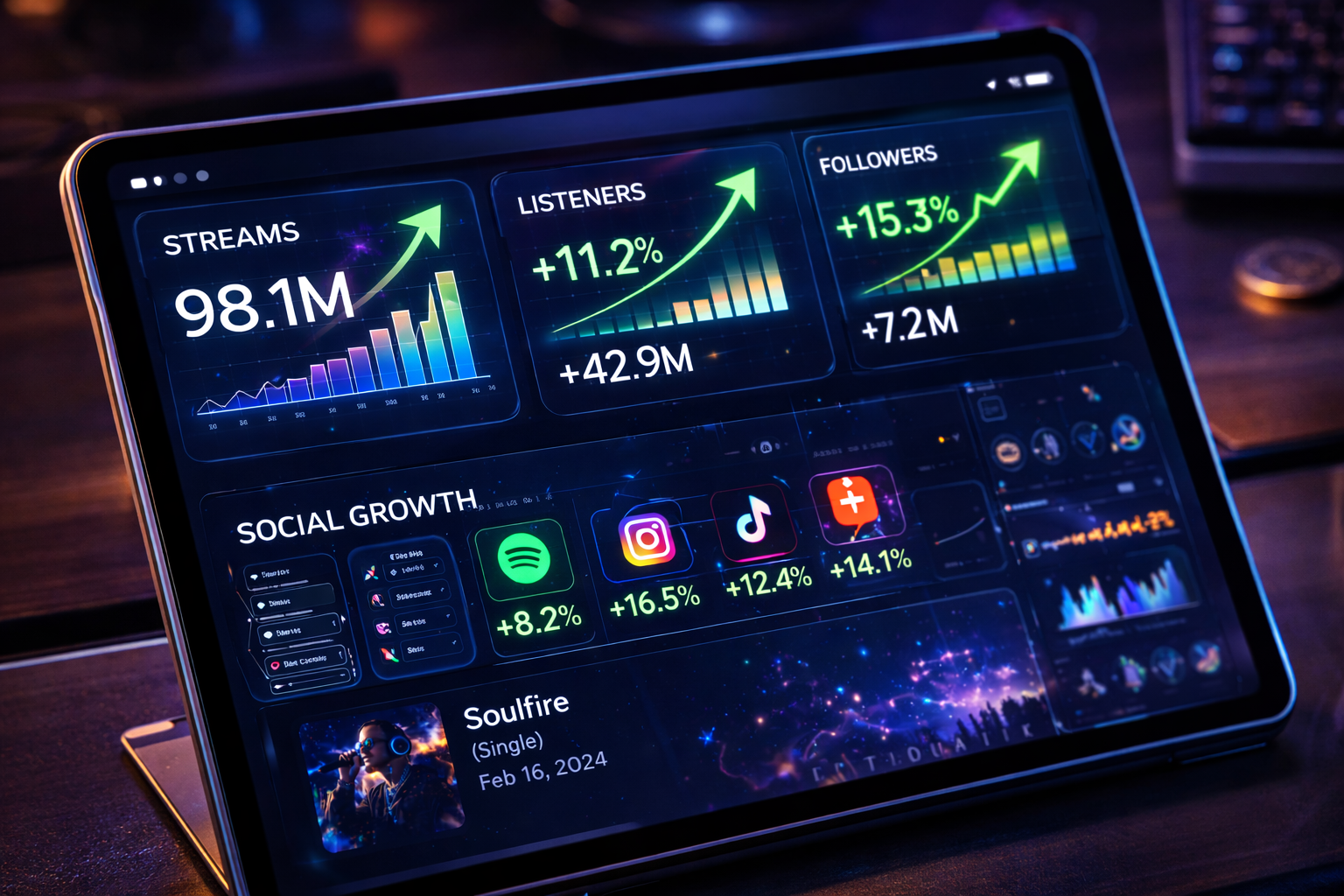
Chartmetric remains the gold standard for Music AI Analytics Tools. It provides a “Cross-Platform” view of your career.
-
Audience Demographics: AI tells you not just the age and gender of your listeners, but also what other artists they are listening to.
-
Playlist Journeys: Track how a listener finds your song—did they come from a Discover Weekly playlist or a private user-generated one? Understanding this journey helps you replicate your success.
5. Social Sentiment Analysis: What are Fans Saying?
It’s not just about how many people are talking; it’s about what they are saying. Advanced Music AI Analytics Tools use “Natural Language Processing” (NLP) to analyze comments on YouTube and Instagram.
-
Sentiment Scoring: Are the comments positive, neutral, or negative?
-
Feedback Loops: If the AI detects that fans are repeatedly mentioning the “bassline” of your song, you know that your next marketing video should highlight that specific part of the track.
6. AI-Powered Playlist Pitching with Songstats
Getting on a Spotify editorial playlist is the dream, but pitching blindly is a waste of time. Music AI Analytics Tools like Songstats help you identify “Gateway Playlists.”
-
Success Probability: The AI analyzes which playlists have recently added songs with a similar “Sonic Profile” to yours.
-
Direct Links: It provides data on the curators, allowing you to pitch with a data-backed message: “My song is performing 30% better than the average track on your playlist.”
To ensure the song you are pitching is high quality, refer to our AI Music Marketing Guide for a complete release framework.
7. Competitive Benchmarking: Learning from the Best
You don’t have to reinvent the wheel. Use Music AI Analytics Tools to spy—legally—on your competitors.
-
Growth Comparison: Compare your growth rate to an artist who is 6 months ahead of you.
-
Benchmarking: If their latest viral hit came from a specific blog feature, the AI will alert you so you can reach out to that same outlet.
8. How to Create a Data-First Release Strategy
To get the most out of Music AI Analytics Tools, follow this 3-step workflow:
-
The Test Phase: Release a 15-second snippet on TikTok and use analytics to see the “Completion Rate.”
-
The Analysis Phase: Check which demographic (Age/Location) engaged the most.
-
The Scale Phase: Use that data to set up your AI-driven ads (as discussed in our marketing pillar) to target only that specific group.
For a deeper dive into how algorithms work, check out Spotify’s Research on AI & Personalization to see the science behind the scenes.
9. The Future of Analytics: Real-Time Career Coaching
By the end of 2026, we expect Music AI Analytics Tools to act as virtual managers. Imagine an AI that pings your phone and says: “Your song is trending in Tokyo. Post a ‘Thank You’ video in Japanese now to double your streams.” This level of real-time coaching is already beginning to happen.
Conclusion: Data is Your Greatest Creative Ally
Many artists fear that data takes away the “soul” of music. In reality, Music AI Analytics Tools give your soul a megaphone. They ensure that your hard work doesn’t go to waste and that your voice reaches the people who need to hear it most.
Don’t leave your career to chance. Embrace the power of AI analytics and start predicting your own success today.