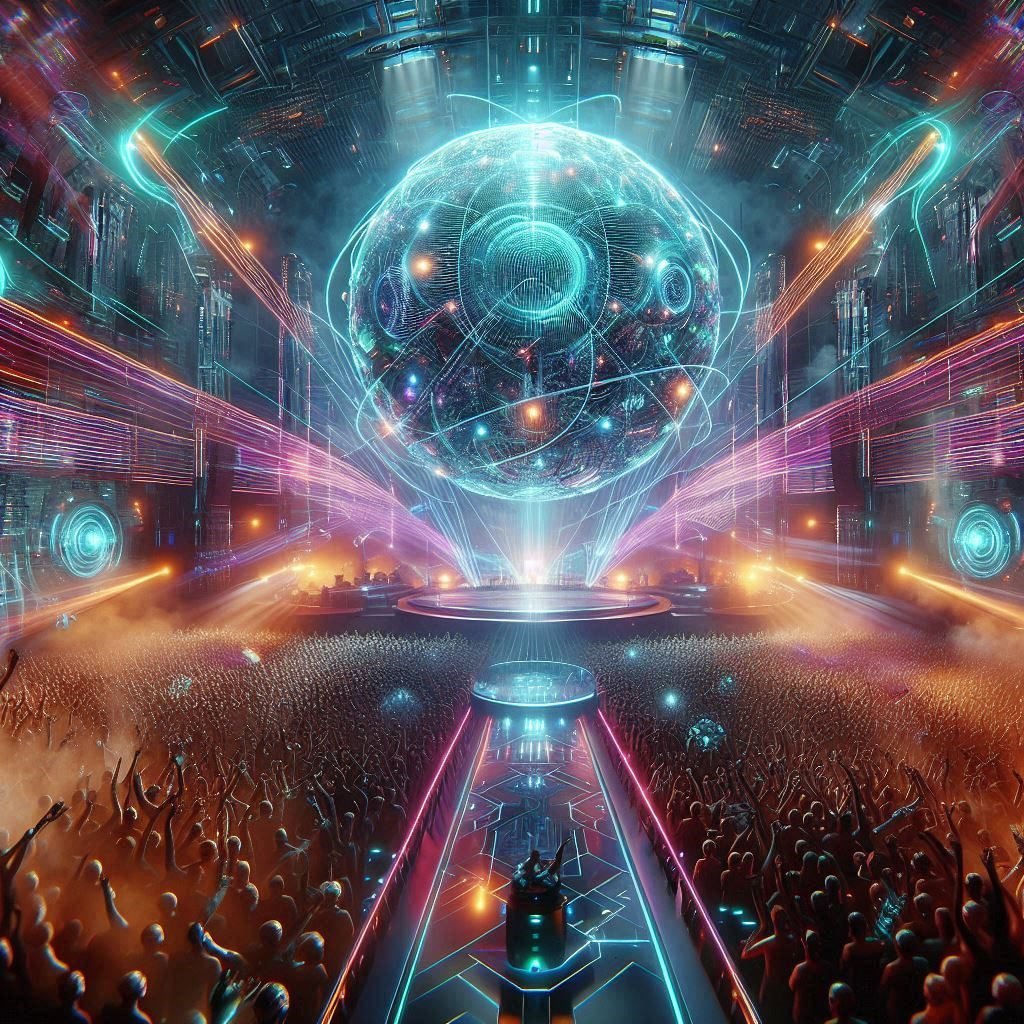
The year 2026 has arrived, and with it, the global music industry has entered its most transformative phase since the invention of the phonograph. We are no longer debating whether AI belongs in music; we are witnessing how the Future of AI Music Technology is becoming the very heartbeat of creative expression. From independent bedroom producers to Grammy-winning engineers, the integration of artificial intelligence has moved from a novelty to a fundamental necessity.
In this exhaustive 2200-word guide, we will explore the cutting-edge trends, the revolutionary tools, and the complex ethical landscape that defines the Future of AI Music Technology in 2026.
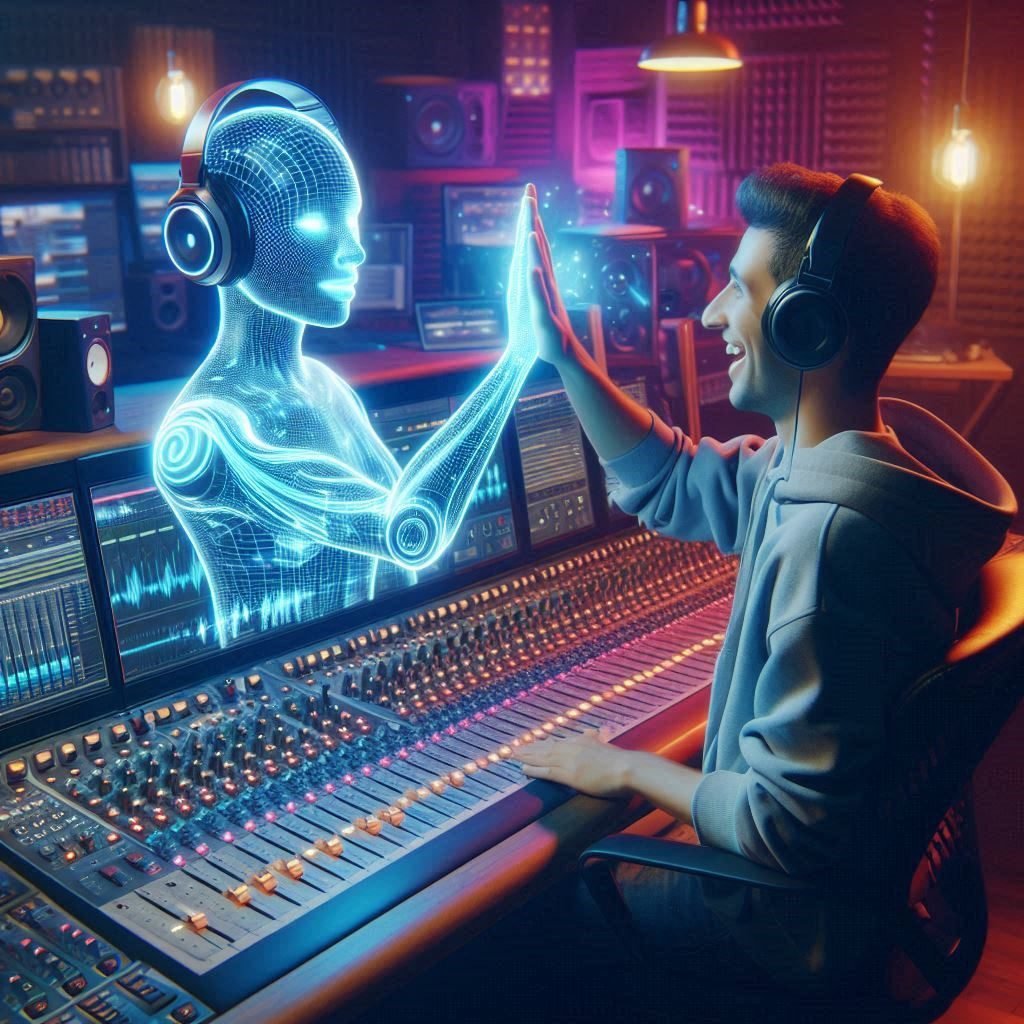
1. The Rise of the “AI-Native” DAW (Digital Audio Workstation)
For decades, DAWs like Ableton Live, FL Studio, and Logic Pro were reactive tools. You clicked, and they performed. In 2026, the Future of AI Music Technology has introduced the “Proactive DAW.”
Modern DAWs now feature “Contextual Intelligence.” As you record a guitar part, the DAW analyzes the rhythm and melody in real-time, automatically suggesting a bassline or a drum groove that perfectly complements your performance. This isn’t just about templates; it’s about generative engines built directly into the software core.
Why This Matters:
-
Elimination of Technical Friction: Producers no longer spend hours on manual EQing or beat-matching.
-
Infinite Inspiration: If you’re stuck on a chord progression, the AI offers “Evolutionary Variations” based on your unique style.
2. Ethical Vocal Cloning and the “Artist Persona” Marketplace
One of the most controversial yet exciting aspects of the Future of AI Music Technology is vocal synthesis. By 2026, the industry has moved past “illegal deepfakes” and into a structured, ethical marketplace.
Platforms like Kits.ai and Udio Pro now offer official, licensed voice models of famous singers. Artists can now “rent” their voices to other producers in exchange for a percentage of the royalties, creating a new revenue stream that didn’t exist two years ago.
The Impact on Collaboration:
Imagine a producer in India collaborating with the “licensed AI voice” of a soul singer in New Orleans. The Future of AI Music Technology has made global collaboration instantaneous and friction-free.

3. Real-time Generative Soundtracks for Gaming and VR
In 2026, the concept of a “static” video game soundtrack is dead. The Future of AI Music Technology has allowed for “Reactive Generative Audio.”
When a player enters a battle in a VR environment, the AI doesn’t just play a “battle track.” It generates a unique piece of music that reacts to the player’s heart rate, movement speed, and in-game success. No two players ever hear the same music twice. This is the pinnacle of immersive entertainment.
Future of AI Vocals: 7 Revolutionary Trends and Ethical Guides for 2026
4. The “Prompt-to-Stem” Revolution
Earlier AI music tools gave you a single, flat audio file. In 2026, the Future of AI Music Technology allows for “Stem-Based Prompting.”
When you type a prompt like “A melancholic 80s synth-wave track with a heavy bassline,” the AI provides a folder containing the individual drums, synths, and bass tracks (stems) along with the MIDI data. This allows professional producers to take the AI’s idea and tweak it with surgical precision in their own studio.
5. AI in Live Performances: The “Holographic” Conductor
Live concerts in 2026 look very different. DJs and bands are now using AI “Conductors” that analyze the crowd’s energy through camera sensors. If the crowd’s energy dips, the Future of AI Music Technology automatically suggests a tempo increase or a key change to the performer, ensuring the dancefloor stays packed.
External Resource for Live Tech:
Check out Billboard’s report on AI-driven concert experiences in 2026.
6. Computational Mixing and “Objective” Mastering
Mastering used to be a dark art reserved for elite engineers. Today, the Future of AI Music Technology has democratized the professional sound.
Tools like iZotope Ozone 13 and LANDR Ultra now use “Spatial Awareness AI.” They don’t just fix the EQ; they analyze how a song will sound in specific environments—whether it’s a high-end club sound system, a car stereo, or cheap smartphone speakers—and create a “Fluid Master” that adapts to the playback device.
7. Sound Design through “Neural Morphing”
Finding the perfect snare or synth lead used to involve scrolling through thousands of samples. The Future of AI Music Technology has introduced “Neural Morphing.”
Producers can now take two completely different sounds—for example, a church bell and a distorted electric guitar—and ask the AI to “morph” them into a completely new hybrid instrument. This has led to the birth of genres that sound unlike anything heard in the 20th century.
8. The Legal Framework: C2PA and AI Watermarking
With the explosion of AI content, 2026 has brought much-needed legal clarity. The Future of AI Music Technology is now protected by “C2PA Digital Watermarking.”
Every AI-generated sound contains an invisible digital signature. This signature tells streaming platforms:
-
Which AI model was used.
-
Which human “prompted” the track.
-
Which licensed samples were included.
This ensures that royalties are distributed fairly among the AI developers, the original sample creators, and the human producer.
Internal Link Suggestion:
Read our guide on 5 best AI music tools 2026: The Ultimate Guide for Creators
9. AI-Powered Music Discovery and A&R
Record labels in 2026 no longer rely solely on “gut feeling.” The Future of AI Music Technology has revolutionized A&R (Artist and Repertoire).
AI algorithms now analyze “micro-trends” on decentralized social media platforms to predict which artist will go viral six months before it happens. This allows independent artists with no marketing budget to get discovered purely based on the “sonic data” of their music.
10. The Shift from “Artist” to “Curator”
The most profound change in the Future of AI Music Technology is the evolution of the musician’s role. In 2026, the musician is increasingly becoming a Curator of AI Possibilities.
The skill is no longer just about “how to play the piano,” but “how to direct the AI to play the piano with the soul of a specific era.” This has opened the doors for millions of creative individuals who previously lacked the technical training to bring their musical visions to life.
Detailed Comparison: Traditional Production vs. 2026 AI Production
| Feature | Traditional Production (Pre-AI) | 2026 AI Production |
| Mixing Time | 10 – 20 Hours | 15 Minutes (AI Assisted) |
| Sample Sourcing | Manual Search (Hours) | Generative/Neural Morphing (Seconds) |
| Vocal Recording | Studio Hire / Expensive Mic | Kits.ai / Licensed Artist Models |
| Collaboration | Physical or File Swapping | Real-time Synchronized Generative Sessions |
| Mastering | $100 – $500 per track | Included in AI Subscription |
Step-by-Step: Setting Up Your AI-Ready Studio in 2026
To stay ahead of the Future of AI Music Technology, you need to update your workflow. Here is the 2026 checklist:
-
Hardware: Ensure you have a “Neural Processing Unit” (NPU) in your computer to handle local AI rendering.
-
DAW Integration: Upgrade to an AI-native version of Logic, Ableton, or Bitwig.
-
Voice Licensing: Create a profile on Kits.ai to manage your own voice model or license others.
-
Security: Implement C2PA watermarking plugins on all your exports to protect your copyright.
-
Mastering: Use a multi-pass AI mastering service like LANDR Ultra for the final polish.
Addressing the “Human Element” Debate
A common fear is that the Future of AI Music Technology will strip music of its “soul.” However, history shows that every technological advancement—from the electric guitar to the synthesizer—was met with the same skepticism.
In 2026, we see that AI has actually increased human creativity. By removing the tedious work (editing breaths, fixing timing, balancing frequencies), artists have more time to focus on the Story and the Emotion of their music. AI is the instrument; the human is still the player.
Conclusion: Embracing the Future of AI Music Technology
The Future of AI Music Technology is not a distant dream; it is the reality of 2026. For those who embrace these tools, the possibilities are infinite. We are standing at the edge of a new musical frontier where the only limit is the human imagination.
Whether you are a professional producer or a curious beginner, now is the time to dive into this ecosystem. The Future of AI Music Technology is waiting for your unique voice to direct it.
Read more : Best AI Music Tools 2026: 25+ Ultimate Solutions to Transform Your Sound
1 thought on “Future of AI Music Technology: 10 Mind-Blowing Trends Reshaping Sound in 2026”